The AI Measurement Dilemma
In recent years, AI (Artificial Intelligence) has become a buzzword in every strategic business meeting. From banking and insurance to retail and manufacturing, everyone is talking about AI, automation, and digital transformation. Leaders expect AI to boost efficiency, cut costs, create new value, and even revolutionize how businesses operate. But when it comes to implementation, a big question arises: How do we truly measure the effectiveness of AI? And are traditional KPIs (Key Performance Indicators) still relevant?
Traditional KPIs: What they measure and what they miss
KPIs are essential tools in modern business management. They help leaders track progress, evaluate results, identify problems, and make data-driven decisions. For example, a customer service company might use KPIs like the number of calls handled per day, average resolution time, customer satisfaction rate, number of complaints, or revenue per employee.
However, as AI starts to replace or support humans in many tasks, traditional KPIs begin to show their limitations. Let's look at a real-world example:
Example:
A bank implements an AI chatbot to answer common customer questions. Previously, the customer service team's KPI was "answer 100% of calls within 2 minutes." With AI, the number of calls drops sharply, but the complexity of requests increases (since simple questions are handled by AI). If you only look at the old KPI, it might seem like performance has dropped (since each employee handles fewer calls), but in reality, AI has allowed staff to focus on more complex issues, improving service quality and reducing stress.
The core issue:
Traditional KPIs often measure outputs (like quantity, speed, revenue, or cost). But AI doesn't just deliver end results. It changes how work is done, optimizes processes, reduces handoffs, automates repetitive tasks, and especially eliminates unnecessary steps and waiting times between departments.
Everyday workflow friction: The hidden cost
In any business, small frictions, like waiting for approvals, handing off tasks, searching for information, or repeating manual steps, slow down progress and waste time and energy on non-value-adding activities. For example, an employee might wait for a manager's approval, send multiple reminder emails, search for files in countless folders, or re-enter data across different systems.
AI can significantly reduce these frictions:
- Chatbots automatically answer repetitive questions, so customers don't have to wait.
- AI systems sort emails and route them to the right person, shortening handoff times.
- AI-powered search helps employees find the right information in seconds.
- Automated approval workflows, deadline reminders, and auto-generated reports.
But if you only use traditional KPIs like transaction volume, average processing time, or revenue, these improvements are easily overlooked.
Measuring AI value: A new approach needed
To truly capture the value AI brings, businesses need to move beyond just measuring outputs. They should track the entire workflow and how much friction, bureaucracy, and manual work AI helps eliminate. Here are some new metrics to consider:
1. End-to-End Cycle Time
Instead of measuring each small step, track the total time from when a request starts to when it's completed. AI shortens this by automating intermediate steps and reducing waiting and handoffs.
Example:
Before AI, contract approval took 5 days (3 days waiting for manager approval, 1 day for legal review, 1 day to send back to the client). With AI automating reminders, sorting contracts, and suggesting approvals, it drops to 2 days. If you only measure contracts processed per day, you'll miss this value.
2. Number of handoffs between departments
AI reduces handoffs, making workflows smoother. Each handoff increases the risk of lost information, delays, or errors.
Example:
A customer request process used to go through 4 departments. Now, AI sorts and sends it directly to the right person, reducing it to 2 steps.
Read more: Top 3 Questions About AI to learn how to apply AI effectively in daily work.
3. Successful Automation Rate
What percentage of tasks are fully automated by AI? This is a key metric for assessing AI adoption.
Example:
Out of 1,000 customer requests per day, AI handles 700 automatically; the remaining 300 are complex and handled by staff. The automation rate is 70%.
4. Employee satisfaction when working with AI
AI doesn't just help customers. It also reduces employee stress and lets them focus on creative work. Measuring satisfaction, ease of use, and adaptability to AI is crucial.
Example:
After 3 months of AI deployment, 85% of employees report less stress and higher motivation.
5. Number of unnecessary steps eliminated
Track how often approvals are needed, manual errors occur, or information is hard to find. The more effective the AI, the lower these numbers.
Example:
Before AI, employees asked IT to recover lost files 50 times a month. With AI-powered search, it drops to 5 times per month.
Traditional KPIs and AI: When to combine?
Traditional KPIs are still valuable when adopting AI. Metrics like revenue, cost, transaction volume, and customer satisfaction remain important for overall business health. However, if you only rely on these, you'll miss the new value AI brings. That's why you should add new metrics like those above to fully assess AI's impact.
Example:
A retail company uses AI to forecast inventory needs. The old KPI was "out-of-stock rate below 2%." With AI, it drops to 0.5%, but more importantly, response time to market changes falls from 3 days to 6 hours. If you only look at the old KPI, you'll miss the agility and adaptability AI provides.
Atlassian Teamwork Collection: Measuring teamwork and AI collaboration
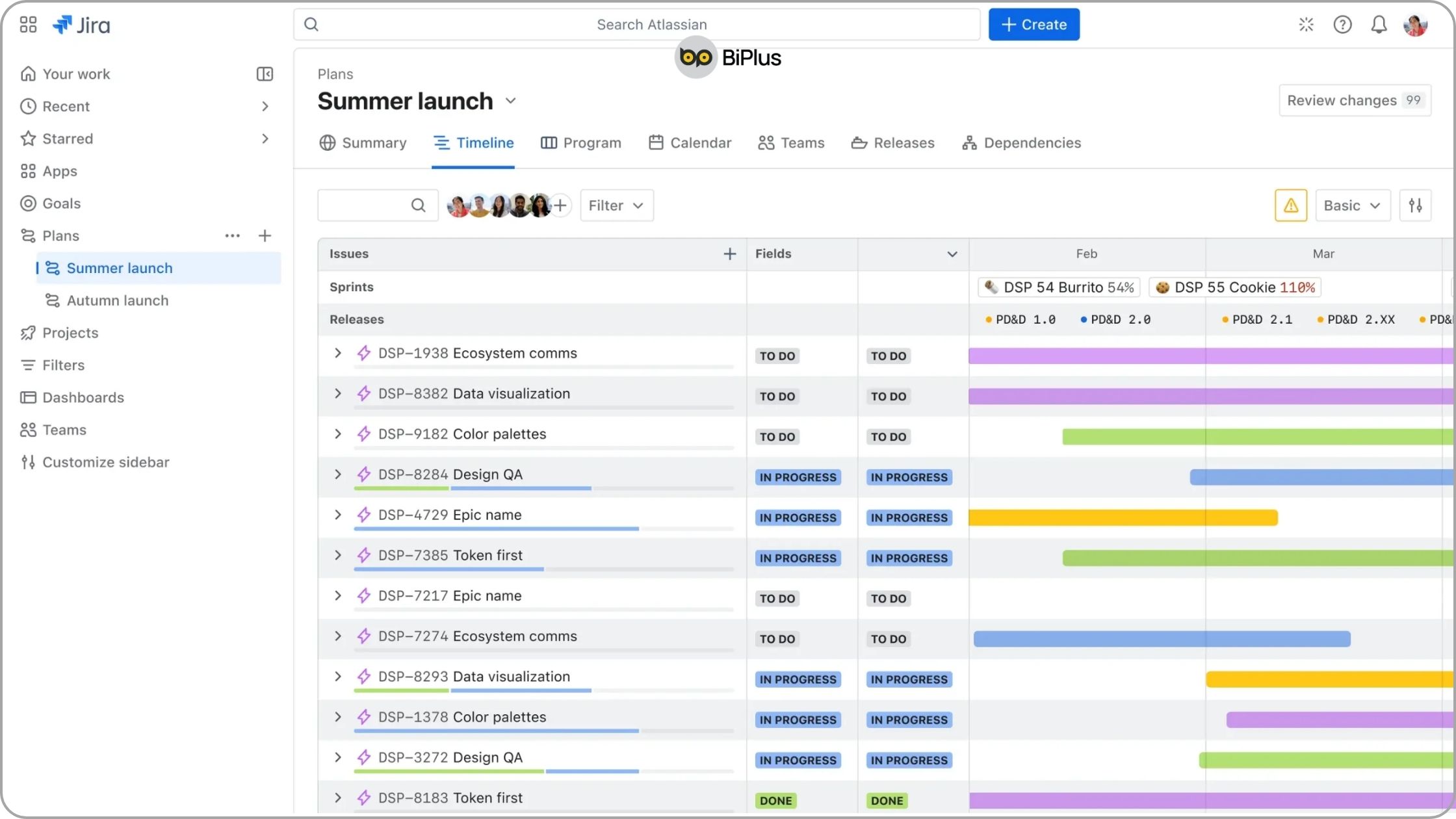
To truly measure the effectiveness of AI-powered teamwork, businesses need a modern work management platform where every process, data point, and interaction is tracked and analyzed.
Atlassian Teamwork Collection offers:
End-to-end workflow tracking: With Jira, Confluence, Loom, and Rovo AI integration, every task, project, and document is connected, making it easy for leaders to monitor progress, spot bottlenecks, and measure real performance.
Collaboration and team performance metrics: Track response times, communication volume, task completion rates, employee satisfaction, and more. All visualized in dashboards.
Identifying and reducing redundant tasks: The system automatically flags bottlenecks and suggests process improvements, reducing wait times and manual work, and enhancing the work experience.
Flexible KPI tracking: Set up new KPIs tailored to your AI transformation goals, so you can accurately measure the value AI and teamwork deliver.
Real-world example:
A financial company uses Teamwork Collection to manage an AI-powered loan approval process. With intuitive dashboards, leaders can easily track:
- Loan processing time drops from 2 days to 4 hours
- Handoffs between departments decrease by 60%
- Automation rate reaches 75%
- Employee satisfaction rises by 30%
- Manual approvals and reminders are significantly reduced
See more: How to Use Rovo in Teamwork Collection
Conclusion: It's time to rethink how we measure AI value
Traditional KPIs help businesses control performance, but they're not enough to capture the true value of AI in today's workplace. Leaders and managers need to shift their measurement approach, focusing on workflow, reduction of manual tasks, and teamwork effectiveness. Atlassian's Teamwork Collection is the tool to help your business transform, maximize AI value, and build more effective, agile teams.
Want to learn how to collaborate effectively with AI in your business? Contact BiPlus for tailored solutions!