AI is No Longer Just an Add-on Tool
Over the past two years, AI has entered the enterprise at a breakneck pace. Most large organizations have begun experimenting with internal chatbots, personal assistants, document summarizers, and data analysis tools.
However, after the initial trial phase, leadership's question has shifted from "What can AI do?" to a more critical one: "Does AI actually help the organization run better?"
- For the CEO: It's about productivity, decision-making speed, and strategic execution.
- For the CIO: It's about platform stability, security, scalability, and integration.
- For the CFO: It's about ROI, hidden costs, and measurable value.
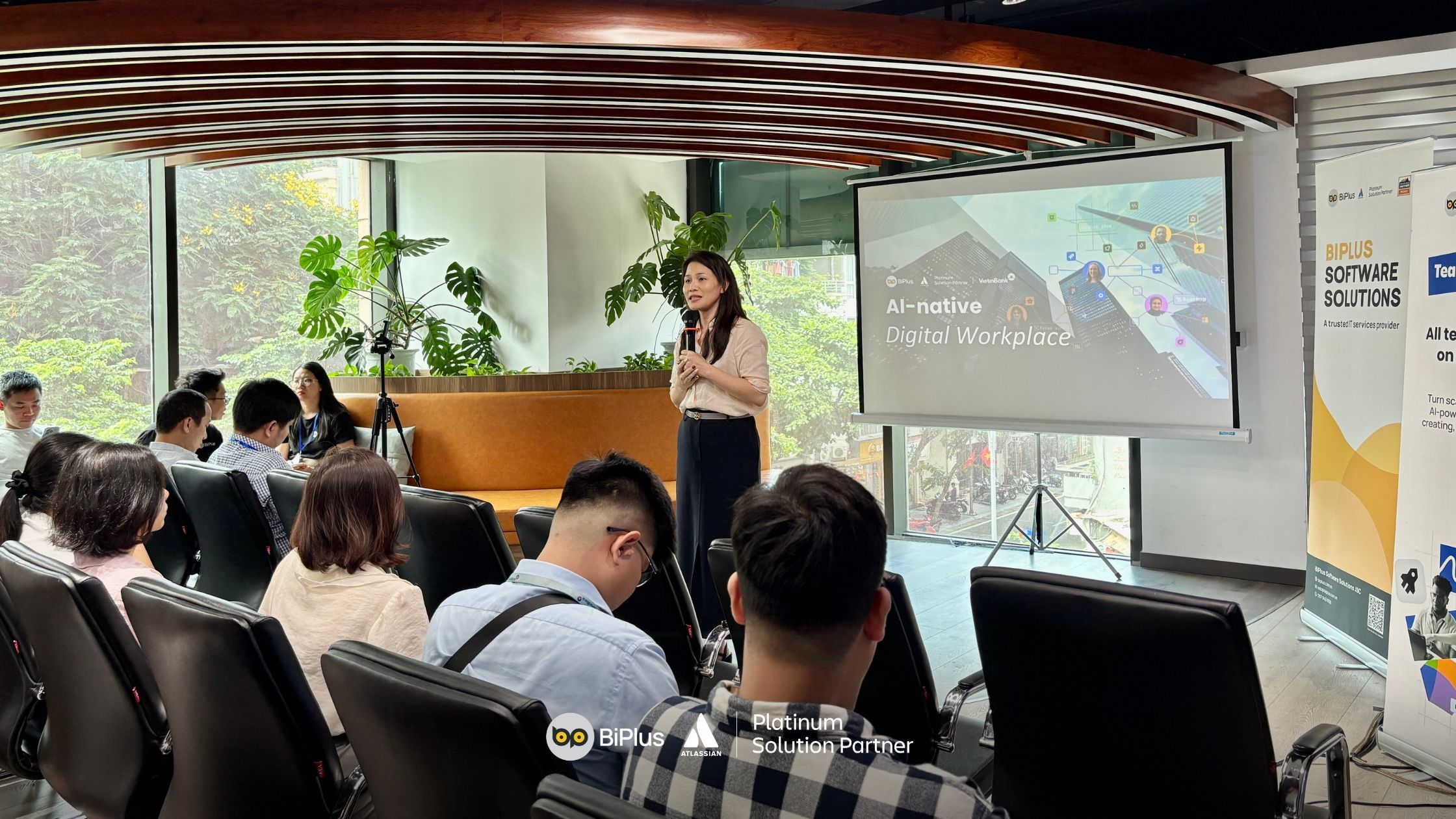
The core issue isn't just having another AI tool; it's whether AI is embedded into the way the organization actually works. This was the driving spirit behind the Roadshow "AI-Native Digital Workplace: What's it look like for VietinBank?", hosted by BiPlus at VietinBank's Digital Factory on May 21, 2026.
From Individual Experiments to Organizational Capability
A significant disconnect currently exists in enterprise AI initiatives: the widening gap between "useful AI" and "scalable value."
At the individual level, the benefits of AI are immediate and visible. A developer uses an AI assistant to write code faster; a marketer uses a chatbot to draft an outline; a manager uses a tool to summarize a lengthy document. These are bolted-on efficiencies: useful, certainly, but they remain isolated bursts of productivity that rarely move the needle for the organization as a whole.
The true enterprise challenge is infinitely more complex. In a large-scale organization like a bank, productivity isn't just about an individual working faster; it is about how effectively that individual's output flows into the next person's input. Currently, that flow is obstructed. Critical information is locked in departmental siloes; processes are fractured as they cross between business, technology, and legal units; and vital organizational knowledge is scattered across a chaotic landscape of emails, disparate meetings, and disconnected management tools.
When AI exists only as a standalone tool, it cannot bridge these gaps. In fact, adding more disconnected AI tools can actually increase digital noise.
To create sustainable, systemic change, AI must move from the periphery to the core. It must be placed exactly where work actually happens:
- Where goals are set: Ensuring strategic alignment is visible to everyone.
- Where plans are deployed: Automating the tracking of complex, multi-team dependencies.
- Where decisions are made: Providing real-time, data-driven insights backed by the organization's full historical context.
AI should not stand outside the workflow as a separate destination or a side-bar assistant. Instead, it must become an invisible, native part of the workflow itself. By embedding AI into the System of Work, we stop asking employees to use AI and instead empower them to work within an environment that is inherently intelligent, connected, and aware. Only then does AI stop being a personal experiment and start becoming a core organizational capability.
A Roadshow Designed for Real Experience
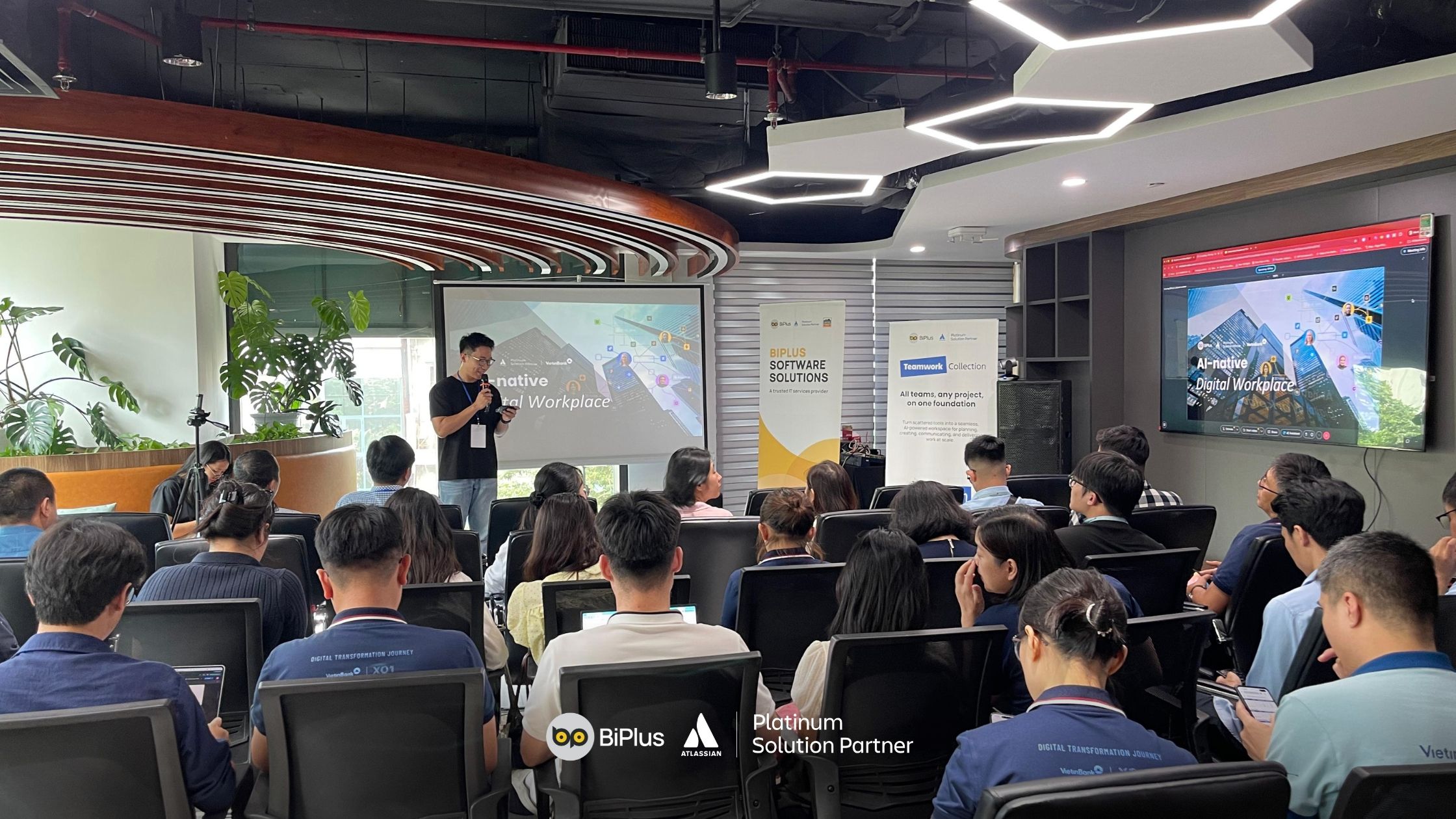
The event brought together a diverse group of participants, from senior leadership and unit managers to PMOs, BAs, Developers, and Operations teams. This diversity is crucial because an AI-Native Digital Workplace only adds value when applied across multiple roles and workstreams.
BiPlus designed the program as a multi-point experience, combining keynotes, solution spaces, and interactive seminars to ensure participants could see AI functioning within a real banking context.
From System of Work to AI-Native Digital Workplace
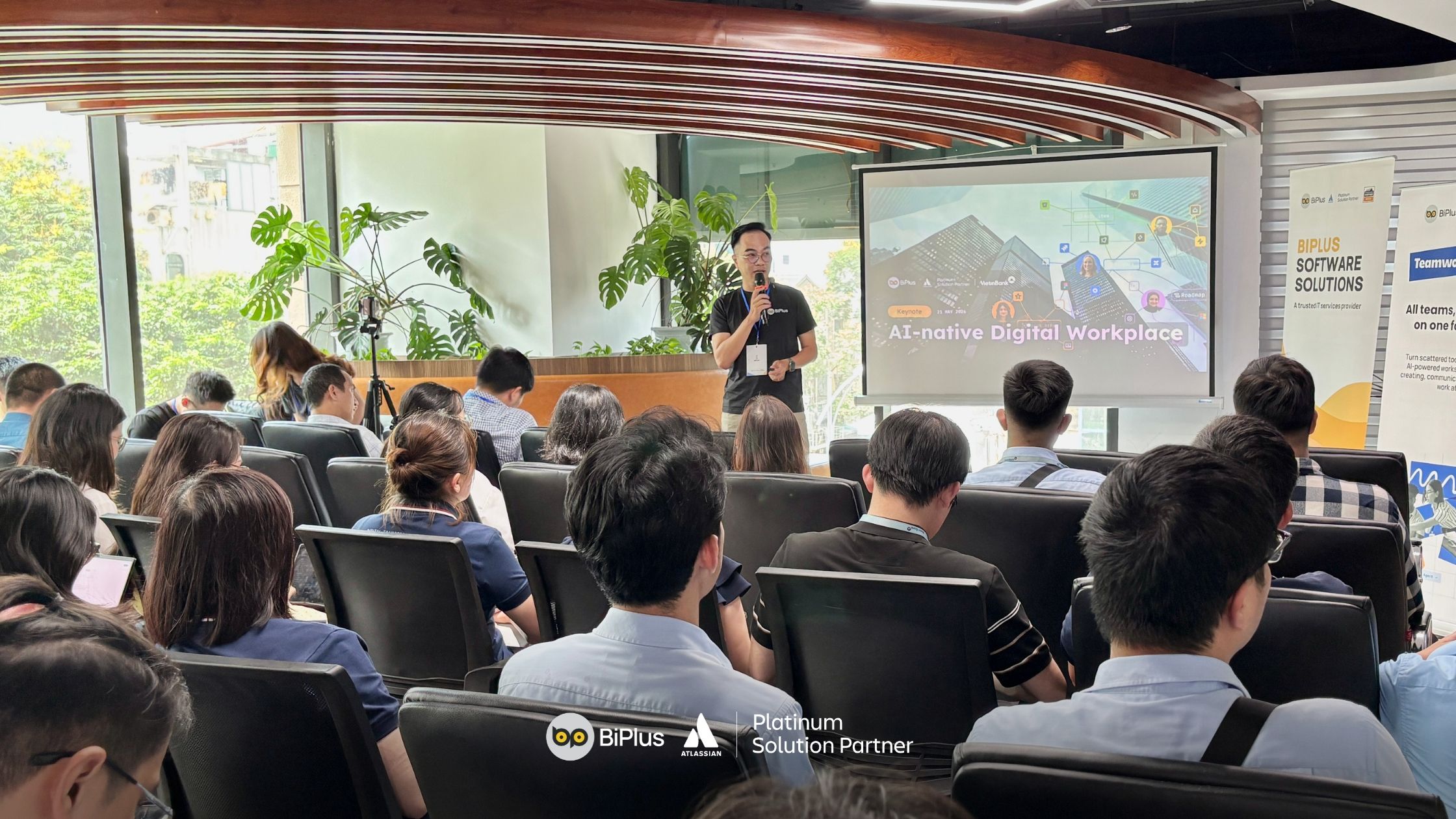
During the keynote session, Mr. Vo Minh Tri (CMO, BiPlus) introduced a pivotal shift in perspective: moving away from viewing AI as a series of isolated features and toward an AI-Native Digital Workplace. This is defined as a cohesive digital ecosystem where people, data, processes, and AI operate on a single, unified platform rather than in separate silos.
The "System of Work" is the heartbeat of any organization. It is the layer where strategy meets execution. When AI is natively embedded into this system, it ceases to be a novelty and starts solving the deep-seated operational challenges that plague large enterprises. By integrating AI into the core workflow, organizations can finally find definitive answers to their most critical questions:
Strategic Alignment: Is the high-level roadmap actually being translated into actionable tasks at the team level, or is there a disconnect between the boardroom and the front line?
Operational Consistency: Are cross-functional teams collaborating based on a "Single Source of Truth," or are they making decisions based on outdated emails and fragmented spreadsheets?
Knowledge Velocity: Can an employee, whether a new hire or a veteran, instantly find the exact organizational knowledge they need at the moment they need it, without wasting hours searching?
Executive Visibility: Do leaders have real-time, unfiltered visibility into the health of project execution, or are they relying on manually compiled (and often delayed) status reports?
For a large-scale organization like VietinBank, the need for control, security, and data integrity is non-negotiable. This is precisely why the Atlassian ecosystem, leveraging Jira for execution, Confluence for knowledge, Loom for context, and Rovo AI as the connective intelligence, presents such a compelling path forward.
Solution Space: AI Through Specific Workflows
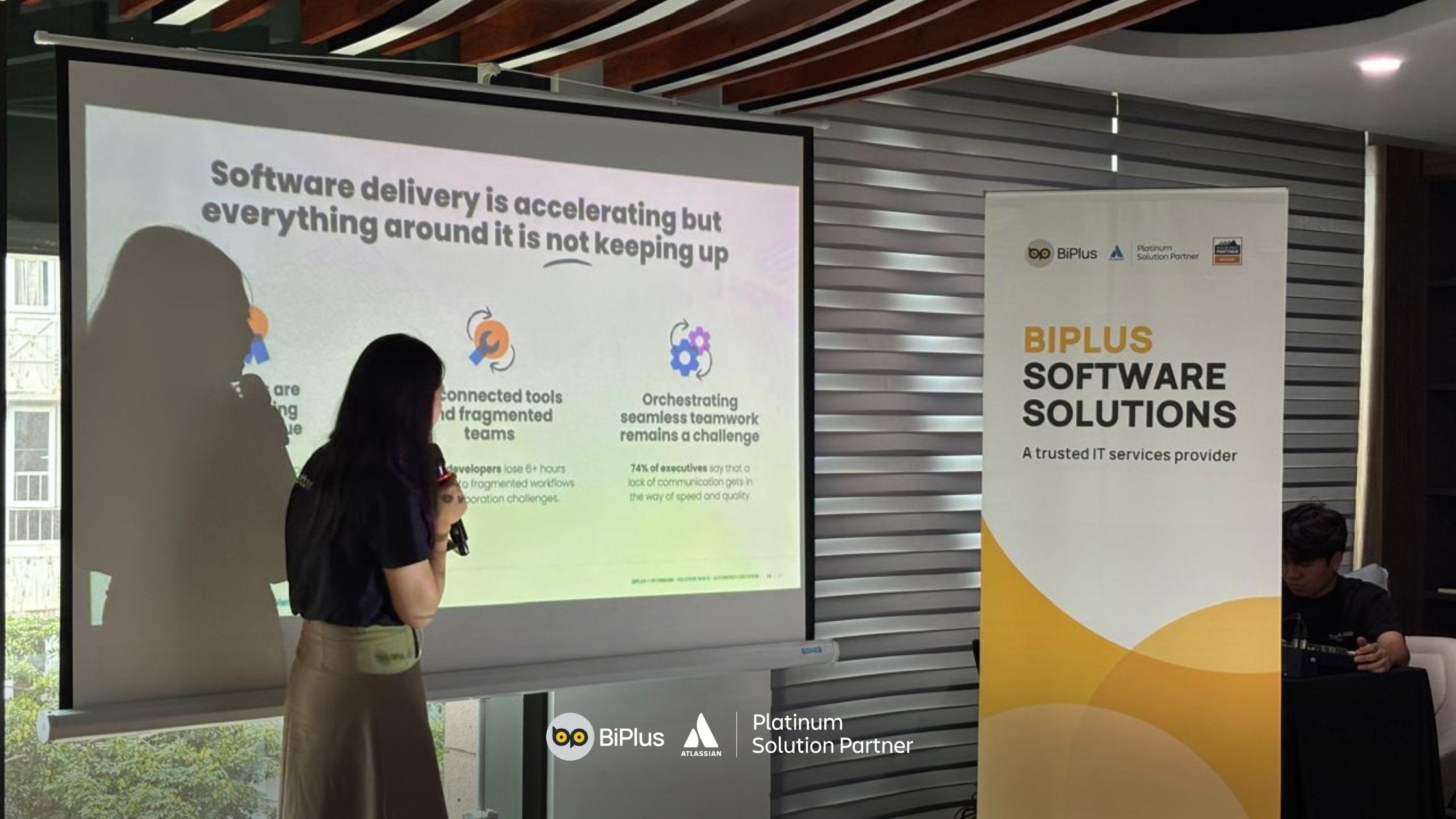
At the Solution Space, BiPlus presented use cases tailored to a bank's operational reality:
AI-Powered Strategy & Planning: Mr. Bui Xuan Hien (CEO, BiPlus) focused on connecting high-level strategy with execution plans, solving the common problem of fragmented information between leadership and delivery teams.
AI-Powered Execution: Ms. Pham Thi Huyen (Solution Lead, BiPlus) addressed cross-departmental collaboration, ensuring that initiatives moving through business, tech, legal, and security units remain on track without information loss.
AI-Powered Development & Operations: Mr. Tran Duc Quy (Solution Engineer, BiPlus) demonstrated how AI optimizes software development and IT service management (Modern ITSM) by summarizing context and assisting in incident resolution.
AI-Native Transformation: Mr. Bui Quang Truong (Solution Consultant, BiPlus) focused on shifting organizational habits to an AI-enhanced environment, ensuring processes are standardized so AI can deliver long-term value.
Seminar: Compound Work with Teamwork Graph
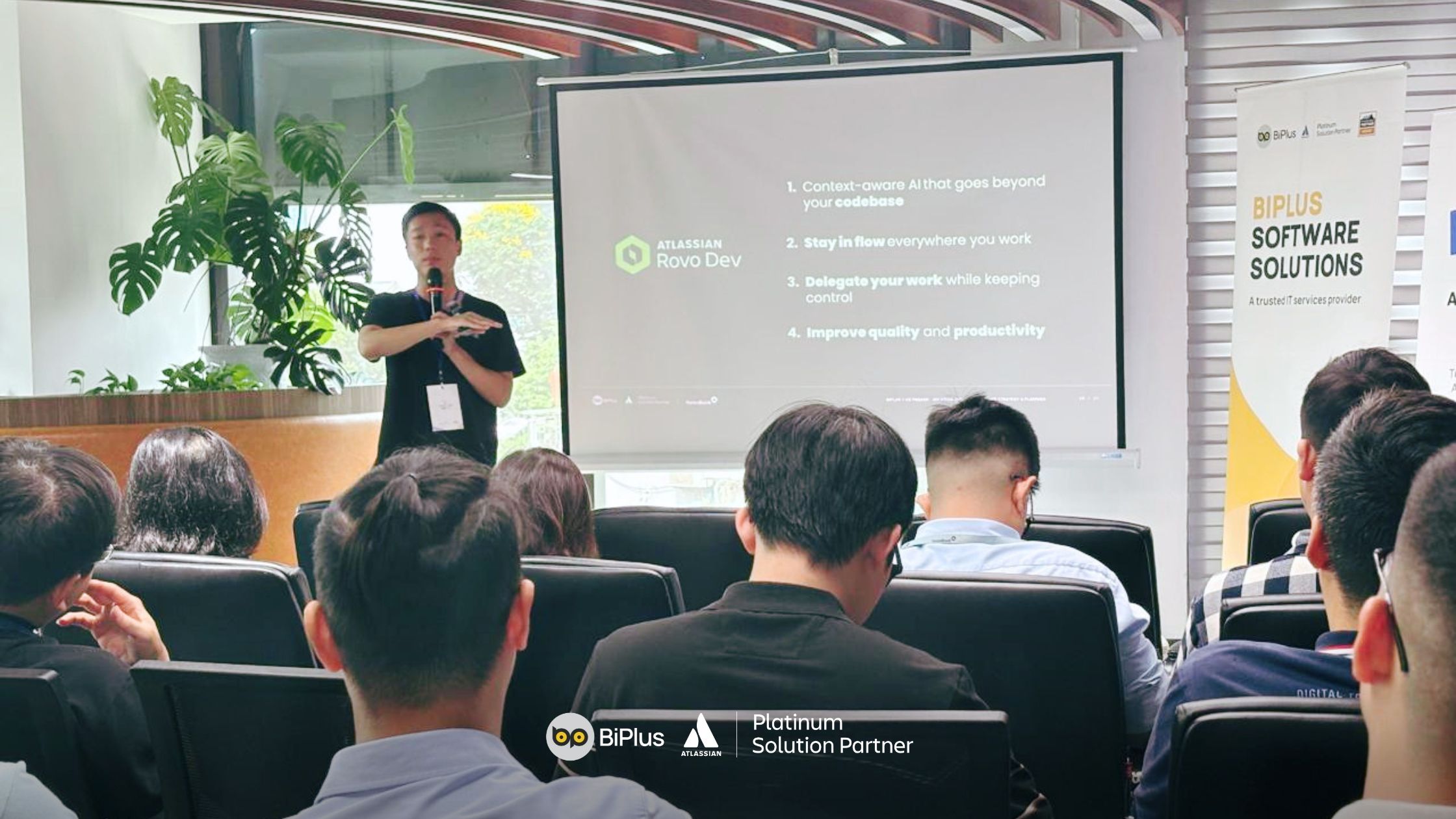
In a standout seminar session, Mr. Tran Duc Quy (Solution Engineer, BiPlus) tackled one of the most persistent silent killers of productivity in large enterprises: the crisis of Knowledge Management.
In organizations of VietinBank's scale, invaluable institutional knowledge is often trapped, buried in thousands of meeting notes, locked within personal experiences, or lost in the endless scroll of scattered emails. When this knowledge is unorganized, it creates a massive invisible operational cost. Teams waste hours hunting for files, reinventing the wheel on solved problems, and inadvertently repeating past mistakes because the lessons learned weren't accessible to the next person.
BiPlus demonstrated that the solution isn't just a better search bar, but a Teamwork Graph. This technology acts as the connective tissue of an organization, mapping the relationships between people, projects, and information.
By creating a unified graph that connects Confluence (Knowledge), Jira (Work), and Loom (Context), the AI, specifically Atlassian Rovo, gains the common sense of the organization. It doesn't just look for keywords; it understands the intent and history behind them. During the session, we illustrated how Rovo AI can:
- Instantly summarize months of project history for a new team member.
- Surface critical insights from past incidents to help solve current technical blockers.
- Deliver proactive suggestions exactly when a user needs them, directly within their workflow.
This synergy creates a seamless flow of knowledge, turning static data into a living asset. By leveraging the Teamwork Graph, VietinBank can move beyond mere data storage to a state of Compound Work, where every project builds upon the intelligence of the last, leading to significantly faster and more consistent decision-making across the entire bank.
Engaging Discussions: Moving from "What" to "How"
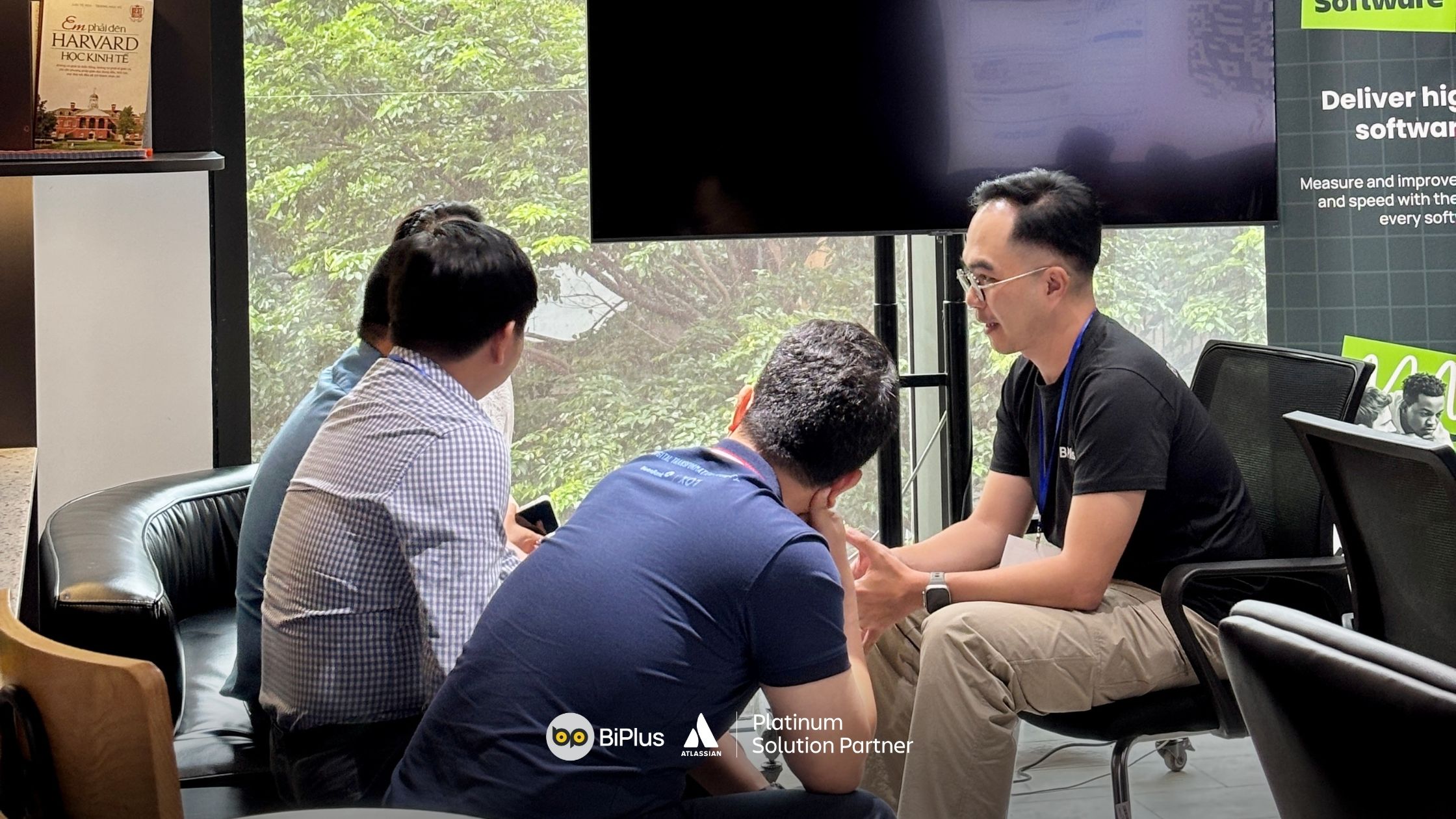
The Roadshow was far from a one-way presentation; it was a high-level exchange of ideas that stood out for the sheer depth and pragmatism of the questions from the VietinBank team. Rather than focusing on surface-level features or wow factors, the dialogue quickly shifted toward the complex realities of large-scale enterprise integration.
The room buzzed with focused discussions on the non-negotiables of modern banking technology:
- Data Security & Privacy: How to leverage LLMs while ensuring absolute data residency and protecting sensitive customer information.
- Scalability & Governance: How to manage thousands of AI agents across diverse departments without creating operational chaos.
- The ROI Equation: How to move beyond vague productivity claims to establish concrete, measurable metrics for AI success.
- Human Transformation: How to effectively reskill the workforce to collaborate with AI rather than just using it as a search engine.
This level of inquiry is a powerful signal. It demonstrates that for VietinBank, AI is no longer just a trend to try out or a experimental sandbox. It has officially become a serious boardroom topic, one that is deeply intertwined with corporate governance, risk management, and long-term business value. These honest, sometimes difficult conversations are exactly what is needed to turn the promise of an AI-Native Digital Workplace into a secure and profitable reality.
A Thank You from BiPlus
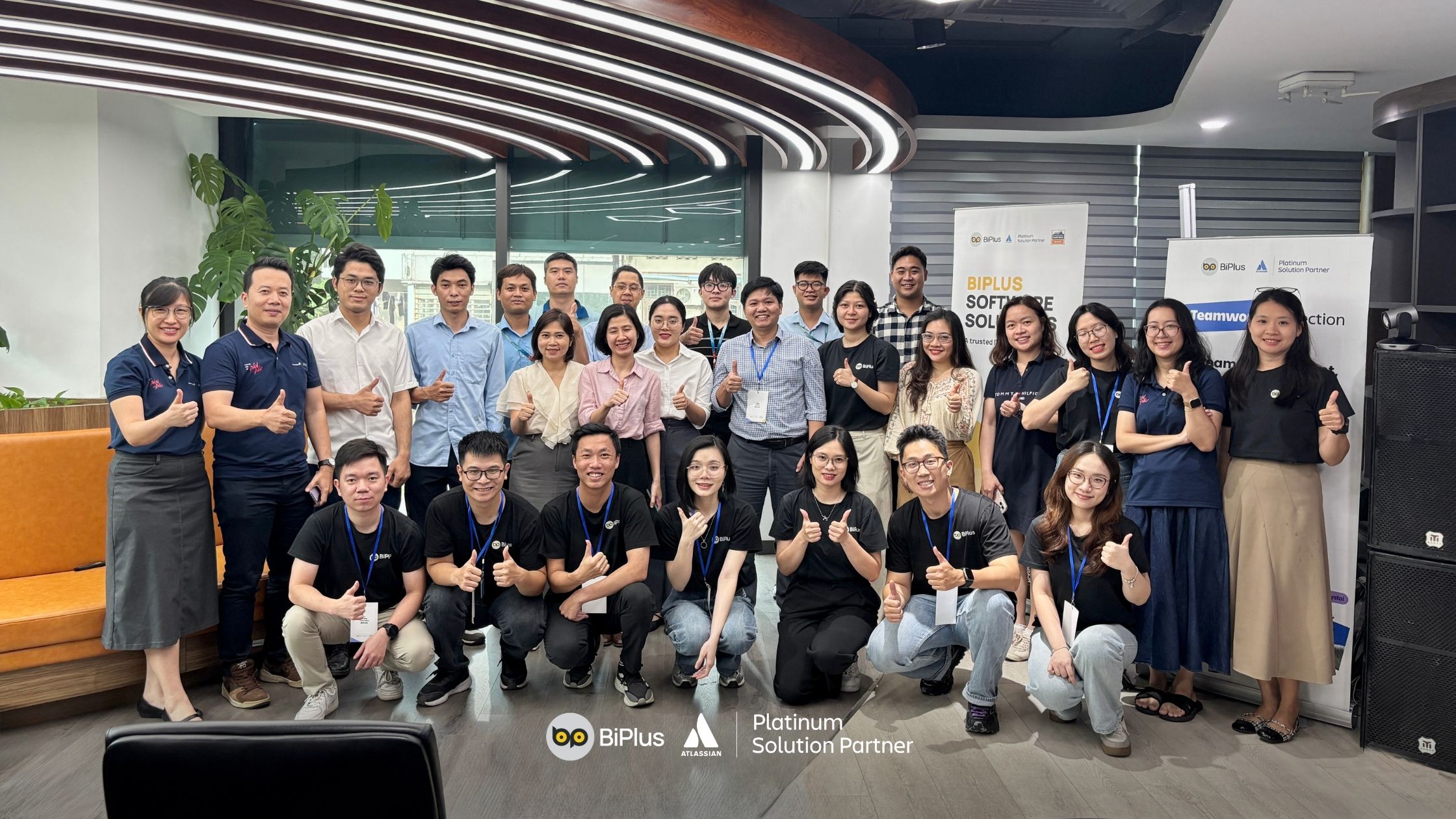
We sincerely thank VietinBank's leadership and staff for their time, their challenging questions, and their commitment to exploring the future of work. For BiPlus, the greatest value of this roadshow was the shared spirit of asking the right question: "Where exactly should AI go in our workflow to create the most impact?"
We look forward to continuing this journey of implementation with VietinBank.
Is your organization ready to bring AI into your actual workflow?
If you are wondering how to connect AI with your current data and systems or how to measure its impact, BiPlus is here to help.
Book a consultation with BiPlus experts here.


